s₀ · all six channels enabled
X=2 · Y=1 · M=1 · N=0
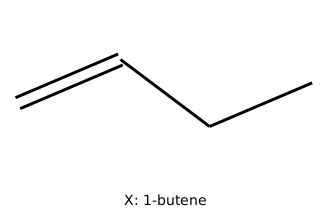 ×2X · selected
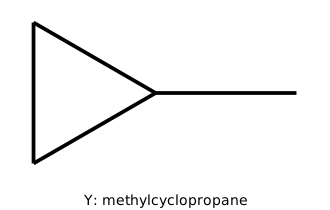 ×1Y · selected
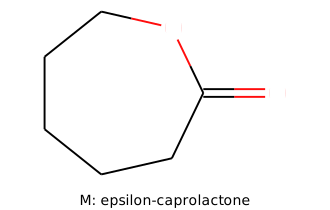 ×1M · support
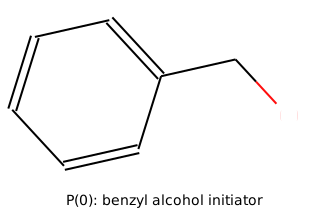 ×1P(n) · n=0
MolFoundry · additional example
Bond-isomer reactions drive a growing chain. The event model closes; the moment search remains unresolved.
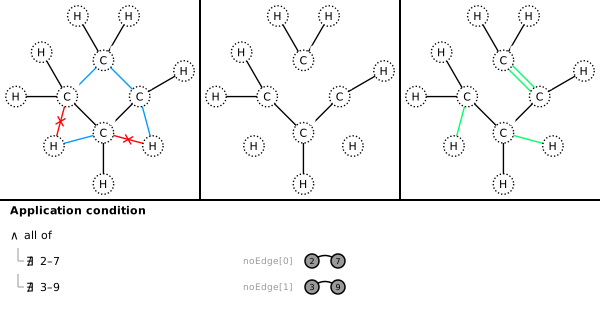
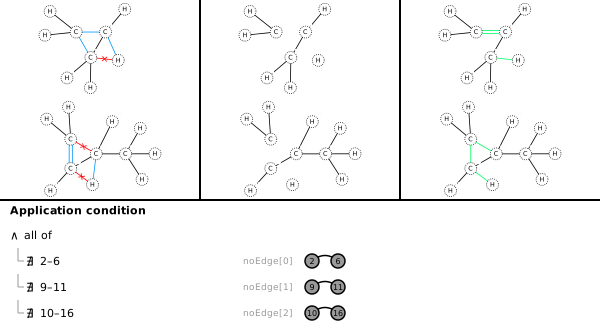
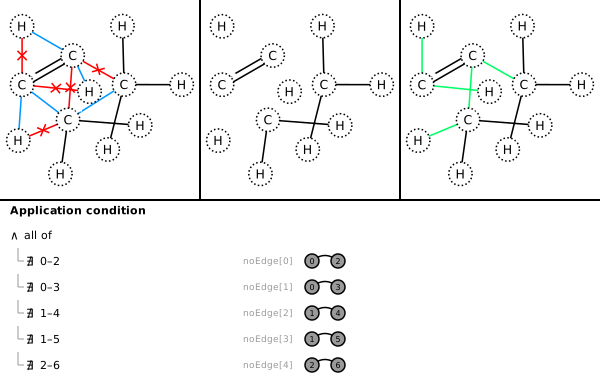
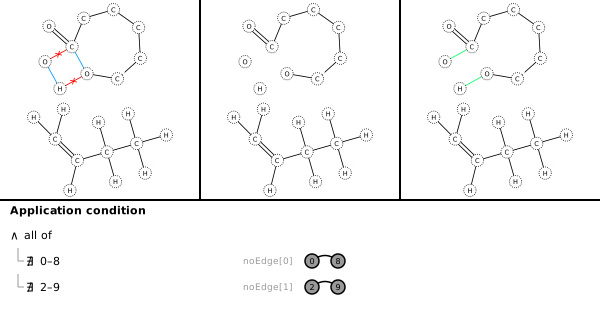
A, X, Y and E are C₄H₈ isomers; B and D are C₃H₆ isomers. Their graphs use ordinary atom and bond labels.
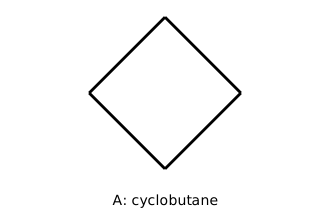
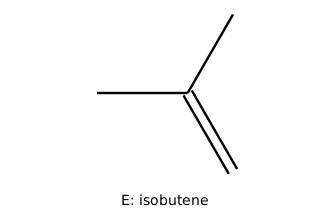
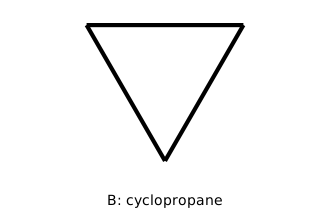
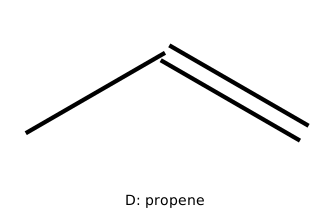
The panels show L ← K → R. Matching atom IDs mark preserved vertices.
Propensity k₂(N_X)₂N_Y/V²; this literal three-molecule span creates the infinite factorial-moment hierarchy. mapped rule GML
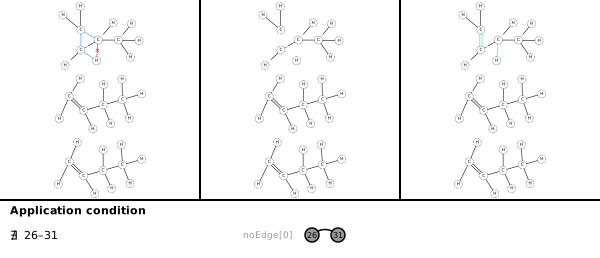
An atom-creating boundary span supplies caprolactone at rate β; the water graph is unchanged context. mapped rule GML
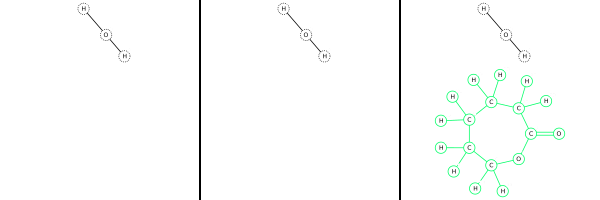
The caprolactone ring is opened and joined to the chain; the complete X molecule is preserved catalytic context. mapped rule GML
Start with X=2, Y=1, one free caprolactone and an empty initiator chain. All six rule classes are enabled.
X=2 · Y=1 · M=1 · N=0
×2X · selected×1Y · selected×1M · support×1P(n) · n=0X=3 · Y=1 · M=1 · N=0
×3X · selected×1Y · selected×1M · support×1P(n) · n=0X=3 · Y=0 · M=1 · N=0
×3X · selected×0Y · selected×1M · support×1P(n) · n=0X=1 · Y=2 · M=1 · N=0
×1X · selected×2Y · selected×1M · support×1P(n) · n=0X=1 · Y=1 · M=1 · N=0
×1X · selected×1Y · selected×1M · support×1P(n) · n=0X=2 · Y=1 · M=2 · N=0
×2X · selected×1Y · selected×2M · support×1P(n) · n=0X=2 · Y=1 · M=0 · N=1
×2X · selected×1Y · selected×0M · support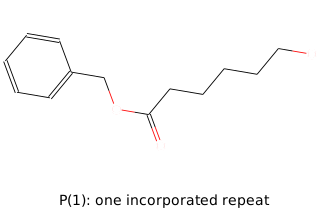 ×1P(n) · n=1
Nodes show molecular representatives; arrows link to the corresponding rule applications.
Queries: complete X and Y molecules. The event model also uses free monomer count M and incorporated-repeat count N.
The language permits arbitrary finite populations, one growing caprolactone chain and chemostatted A/B feeds. DPO rules preserve atoms and valence, apart from monomer input. These are hypothetical net reactions.
Generator images are expanded in falling-factorial counts. Each new coordinate corresponds to a pattern of complete X/Y molecules.
| Graph observable | Round | Exact coordinate | Degree | Pattern |
|---|---|---|---|---|
| X | 0 | N_X | 1 | GML |
| Y | 0 | N_Y | 1 | GML |
| ONE | 1 | 1 | 0 | GML |
| X2Y | 1 | (N_X)_2 N_Y | 3 | GML |
| XY | 2 | N_X N_Y | 2 | GML |
| X2Y2 | 2 | (N_X)_2 (N_Y)_2 | 4 | GML |
| X3Y | 2 | (N_X)_3 N_Y | 4 | GML |
| X3Y2 | 2 | (N_X)_3 (N_Y)_2 | 5 | GML |
| X4Y | 2 | (N_X)_4 N_Y | 5 | GML |
| X3 | 2 | (N_X)_3 | 3 | GML |
| X2 | 3 | (N_X)_2 | 2 | GML |
| XY2 | 3 | N_X (N_Y)_2 | 3 | GML |
| X2Y3 | 3 | (N_X)_2 (N_Y)_3 | 5 | GML |
| X3Y3 | 3 | (N_X)_3 (N_Y)_3 | 6 | GML |
| X4Y2 | 3 | (N_X)_4 (N_Y)_2 | 6 | GML |
| X5Y | 3 | (N_X)_5 N_Y | 6 | GML |
| X4 | 3 | (N_X)_4 | 4 | GML |
| X4Y3 | 3 | (N_X)_4 (N_Y)_3 | 7 | GML |
| X5Y2 | 3 | (N_X)_5 (N_Y)_2 | 7 | GML |
| X6Y | 3 | (N_X)_6 N_Y | 7 | GML |
| X5 | 3 | (N_X)_5 | 5 | GML |
| Y2 | 4 | (N_Y)_2 | 2 | GML |
| XY3 | 4 | N_X (N_Y)_3 | 4 | GML |
| X2Y4 | 4 | (N_X)_2 (N_Y)_4 | 6 | GML |
| X3Y4 | 4 | (N_X)_3 (N_Y)_4 | 7 | GML |
| X4Y4 | 4 | (N_X)_4 (N_Y)_4 | 8 | GML |
| X5Y3 | 4 | (N_X)_5 (N_Y)_3 | 8 | GML |
| X6Y2 | 4 | (N_X)_6 (N_Y)_2 | 8 | GML |
| X7Y | 4 | (N_X)_7 N_Y | 8 | GML |
| X6 | 4 | (N_X)_6 | 6 | GML |
| X5Y4 | 4 | (N_X)_5 (N_Y)_4 | 9 | GML |
| X6Y3 | 4 | (N_X)_6 (N_Y)_3 | 9 | GML |
Linear closure unresolved. The first X equation already requires a third-order moment:
Expanding X2Y = (N_X)₂N_Y introduces moments up to degree five.
pJC closed: 6 event classes, with activities of degree at most 3. This does not imply a finite expectation ODE.
δ is the coordinate jump; ae is its activity.
| Event class | Rule / rate | Computed δ | Activity ae | exp(λ·δ) − 1 |
|---|---|---|---|---|
source | sourcek1*a*V | ΔX=+1 | 1 | exp(lambda_X) - 1 |
autocatalysis | autocatalysisk2/V^2 | ΔX=+1, ΔY=-1 | -X*Y + X^2*Y | exp(lambda_X - lambda_Y) - 1 |
conversion | conversionk3*b | ΔX=-1, ΔY=+1 | X | exp(-lambda_X + lambda_Y) - 1 |
sink | sinkk4 | ΔX=-1 | X | exp(-lambda_X) - 1 |
monomer-inlet | monomer_inletbeta | ΔM=+1 | 1 | exp(lambda_M) - 1 |
growth | growthk_g | ΔM=-1, ΔN=+1 | X*M | exp(-lambda_M + lambda_N) - 1 |
The approximations start from x=0.4, y=2.5, M=4 and N=0. Higher factorial moments start from fixed populations; untracked moments use the stated boundary approximation.
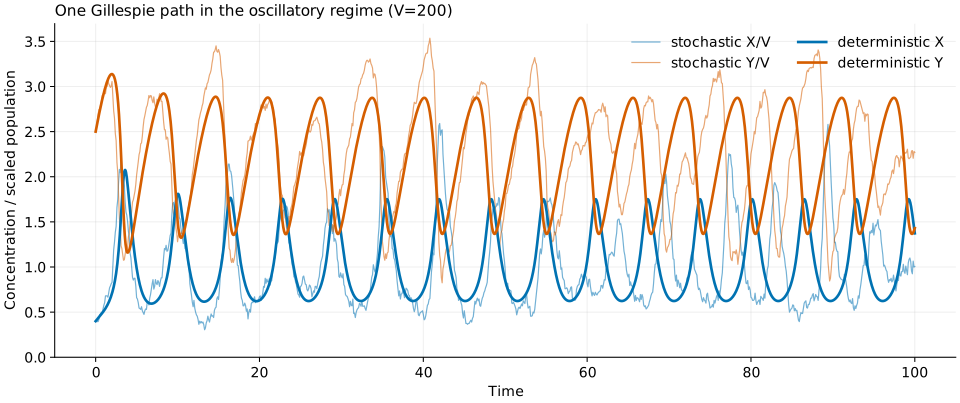
The stochastic reference uses X=Vx and Y=Vy at V=200, with the same monomer and chain counts.
Approximation. The selected moment equations are integrated with a factorization of untracked moments. Core rates k₁…k₄ are fixed at 1.
Mean field: limit-cycle side
Loading generated hierarchy…
The mean-field threshold is b=1+a².
| Tier | Expanded exact rows | Integrated dimension | Approximation |
|---|---|---|---|
| Mean field | 2 | 4 | Only X and Y are retained; X2Y is closed by x²y. |
| + autocatalytic moment | 4 | 5 | X2Y receives its own inferred differential equation. |
| Nine-moment hierarchy | 10 | 11 | Nine nonconstant inferred rows are integrated. |
| Seventeen-moment hierarchy | 18 | 19 | Seventeen nonconstant inferred rows are integrated. |
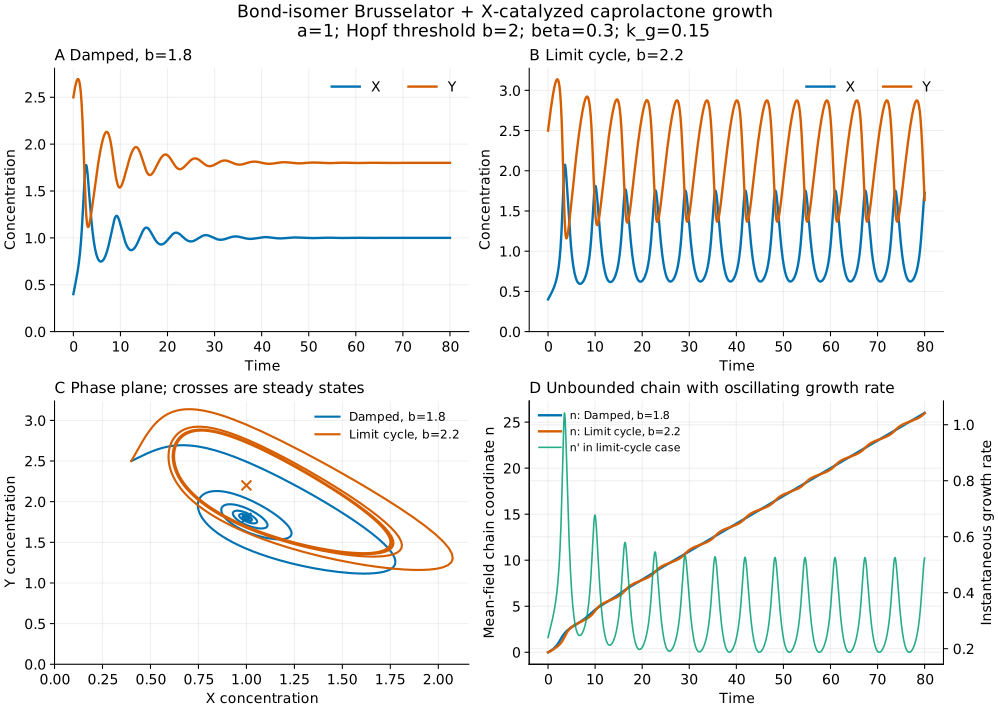
| Reference case | max Re λ | late X amplitude | n(300) |
|---|---|---|---|
| Damped, b=1.8 | -0.100 | 2.10991e-08 | 92.000 |
| Limit cycle, b=2.2 | 0.100 | 1.12845 | 91.973 |